
- Why Airbnb cannot copy Amazon
- Sonder showed the cost of greater control (but failed)
- Professional managers are forming the product
- One marketplace, different reasons to book
- The Real Elephant in the room
Airbnb’s next challenge is to make a highly varied marketplace feel dependable without losing the character that made people use it in the first place. Changing guest expectations make that harder than it was when Airbnb began. This video gives a great historic record of control, disturbances in real estate evolution and comparisons of Airbnb’s actual challenges video about Airbnb’s history explores zoning, taxation and the gradual loss of its standing as the cheaper alternative to a hotel. But it left me with the growing question: what happens when guests expect alwasy expect both the individuality of a home and the reliability of a hotel?
In Airbnb’s early years, many guests were willing to accept uncertainty as part of the experience, the early adopters. The photographs might be modest and few. Check-in might mean arranging a time to meet the owner. Standards varied, but that variation was often part of the appeal and guests were buying access to somewhere they could not easily find through a conventional hotel booking.
Today, a guest may still want an unusual cottage, an architect-designed house or less likely a room in someone’s home. But they also expect clear total prices, accurate photographs, immediate confirmation, straightforward access, fast answers, and help when something goes wrong. They can compare those attributes across hotels, serviced apartments and holiday homes in the same search session.
That changes the nature of Airbnb’s problem. It needs to give guests confidence in a stay it doesn’t operate and a property it doesn’t control. Ultimately, many are starting to realise that Airbnb can’t own the warehouse.
Why Airbnb cannot copy Amazon
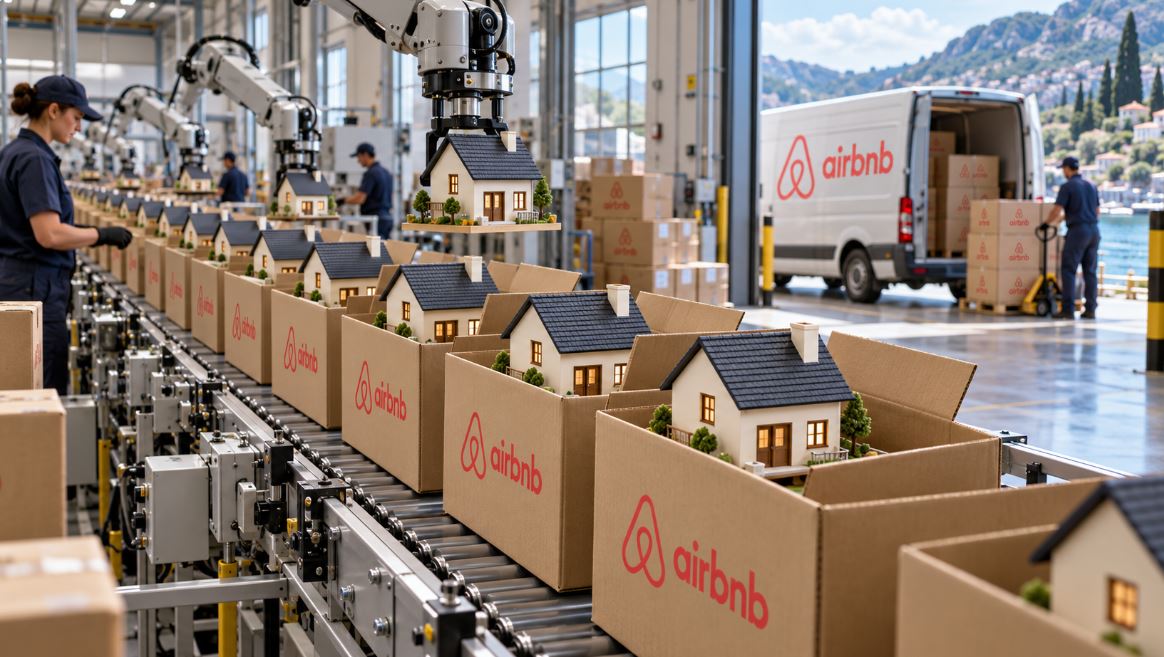
Amazon improved marketplace reliability by taking greater control of fulfilment. Warehouses, stock management and delivery systems made the purchasing experience more predictable. STR homes do not work like warehouse stock, their locations, layouts, buildings, and those often complaining neighbours differ. The people who own and manage them have different resources and priorities. Even two similar apartments can deliver very different stays because of furnishings, age, use, cleaning, maintenance, access arrangements and guest support.
Airbnb can improve the information guests see, and the standards hosts must meet. It cannot make millions of independently controlled homes interchangeable. Nor should it want to: much of the attraction of a holiday home is that it is particular to its destination, local geography, climate and local planning requirements.
The goal, then, is not uniformity. It is dependable difference: helping guests understand what they are booking and trust that the stay will deliver what was promised.
Sonder showed the cost of greater control (but failed)
Sonder pursued a more controlled version of accommodation. By leasing and operating units under a common brand, it is able to shape the design and guest experience more directly than a marketplace can. That also brought substantial fixed commitments and part of the reason it crashed and burned.
Its collapse warns of the risks of that model, particularly when occupancy, costs, or margins fall short. It is not proof that professionally operated accommodation cannot scale, or that taking more control of inventory is always a mistake. The lesson is narrower and more useful: consistency has a cost, and the operator carrying that cost needs resilient unit economics.
For Airbnb, taking direct operating responsibility for its extensive and diverse inventory would change the business fundamentally. Its a more plausible route is to influence quality through platform rules, guest feedback, search visibility and the standards expected of hosts and managers.
Badges help, but guests judge the whole stay.
Airbnb already gives guests quality signals through Superhost, Guest Favourites, and its more curated offerings. These help people browse a huge catalogue and they are designed to reassure a guest who is choosing between unfamiliar properties.
Yet a badge cannot eliminate uncertainty prior to arrival and in-stay. A highly rated property can still have a maintenance failure, a responsive host may depend on a local contractor who is unavailable that day. Guest confidence rests on the entire journey: the accuracy of the listing, the clarity of the price, the condition of the property, the ease of arrival and the response when plans change.
This is where guest attitudes matter. As short-term rentals have moved into mainstream travel, more people book them for practical reasons: space for a family, a kitchen, a longer stay or a particular location. They may have little interest in the romance of “living like a local”. They want the accommodation to work, be good value, not to have too many rules, ease of access, technology that works and promises kept.
Other guests may still be still searching for something memorable and distinctive. They may accept an unconventional layout or a remote location because those qualities are the reason for the trip. But they, too, expect honesty about what they will find and quick support if something fails.
“Unique” and “reliable” are therefore not opposing choices. A distinctive property can be run exceptionally well. A standardised apartment can disappoint. The difficulty is that guests need different information to judge each proposition and with such a massive variety of product, stratifying it is very not just hard its close to impossible globally. Unlike well known hotel brands, where you know what you get when you book.
Professional managers are forming the product.
Much of the improvement guests notice is offered beyond Airbnb itself. Property managers invest in photography, pricing, cleaning, maintenance, staff training and guest communication. They decide whether listings accurately describe a property and whether someone can solve a problem at 10 p.m.
For a manager operating at scale, consistency is also an economic requirement. Clear processes reduce errors, and good maintenance protects reviews and recurring business. Trained teams can resolve problems before they become refunds or disputes.
Regulation may accelerate professional management in some destinations. Registration, licensing and reporting obligations can be easier for an established operator to handle than for an occasional host. But the effect will vary: restrictive rules can also remove professional supply, limit nights available or favour certain property types. No single, inevitable consolidation story applies to every market.
Airbnb benefits when its supply becomes more dependable. Yet the managers doing that work have their own brands, costs and guest relationships. That creates an important strategic question for both sides: who receives the lasting value when an operator makes a stay more trustworthy, the operator, the platform, or both?
This is very contentious and thousands of managers are attempting to remove themselves from being under the Airbnb umbrella brand, who probably considers them cleaners and little more.
One marketplace, different reasons to book
I expect the distinction between stay types to become more important.
One guest wants a singular property and is willing to choose carefully: the farmhouse, the design-led retreat, the home with a remarkable view. Another wants suitable, dependable accommodation for a trip with fixed dates and realistic needs. Many bookings sit somewhere between those book ends.
Airbnb can serve all of them, but it needs to make the differences legible. A guest looking for character needs to understand what makes a property special, including its peculiarities. A guest prioritising ease needs confidence in the essentials: accurate information, suitable amenities, reliable access and prompt support. Presenting every property in much the same listing format, with a handful of badges, can only go so far. As expectations rise, the quality of the underlying operation matters more.
That creates opportunities for strong accommodation brands. A curated collection can guarantee both character and standards. A professional urban operator can promise a smooth, predictable stay. A local manager can combine destination knowledge with the reassurance that someone nearby will answer the phone. Those are different propositions, and each deserves to be expressed clearly.
What this means for operators
For managers, the question isn’t simply whether Airbnb is moving toward hotels. It is whether your business knows what guests rely on it to deliver. If you sell distinctive stays, can you explain their character honestly while removing avoidable friction from the booking and arrival experience? If you sell dependable accommodation, are your standards strong enough to justify that promise across the whole portfolio? If you claim both, does every property and every team member support both?
These questions affect more than reviews. They shape staffing, technology choices, owner agreements, brand positioning and ultimately the durability of the business. An operator whose performance depends entirely on a platform badge has built a different asset from one whose guests actively seek out its name.
Airbnb will keep improving the signals that help guests choose. Regulation and professional management will additionally influence the supply available to it. But no platform feature can replace a well-run property or a team that can handle the unexpected.
The future of short-term rentals may be less about making every stay alike and more about making different kinds of stays reliably what they claim to be. For guests, that means fewer unpleasant surprises. For operators, it means deciding what promise their business makes, and building the people, systems and culture to keep it.
The Real Elephant in the room

The pressure from planning and taxation
Another limit to Airbnb’s ability to shape its inventory is local government: it decides where short-term accommodation is permitted. A home that works beautifully for guests may still sit in a neighbourhood where residents and planners object to frequent visitor turnover. As housing pressures grow, more authorities are likely to ask whether a property is principally a home, occasional guest accommodation or, in practice, a small hospitality business. The answer can determine whether it may operate at all and certainly licensing and registration is now a global challenge.
Taxation creates a parallel pressure. Local authorities increasingly expect short-term rentals to contribute to the public services and tourism infrastructure visitors use, just as other accommodation businesses do. Airbnb already collects and remits certain occupancy taxes in some jurisdictions, but the rules vary by location. For an operator, the cumulative effect matters more than any single charge: tax, licensing, compliance and platform fees all feed into the final price a guest sees. That makes the old assumption that a holiday rental will naturally be cheaper than a hotel harder to sustain.
These pressures will not land evenly. A rural cottage, an occasional spare room and a professionally operated city apartment can have very different effects on housing and neighbourhoods. Some are considered negative real estate pricing and residential renting forces, other have to be balanced agaisnt tourism income and local sustainability. This fragmentation is a strategic and policy management risk for Airbnb. It can build a global booking platform, but it cannot guarantee that a particular city or destination will continue to permit the supply that platform depends on.
In the United States, the legal limits of local powers may be tested further as cities introduce tighter restrictions and platforms or hosts challenge them. The Supreme Court has recognised broad local authority to zone land for a century, so its involvement would not automatically mean a victory for Airbnb or hosts. A future case could, however, ask the Court to clarify a narrower question about property rights, unequal treatment or the obligations imposed on booking platforms. Until then, city-by-city planning decisions may have a more immediate effect on Airbnb’s future inventory than any change to its search algorithm.
