
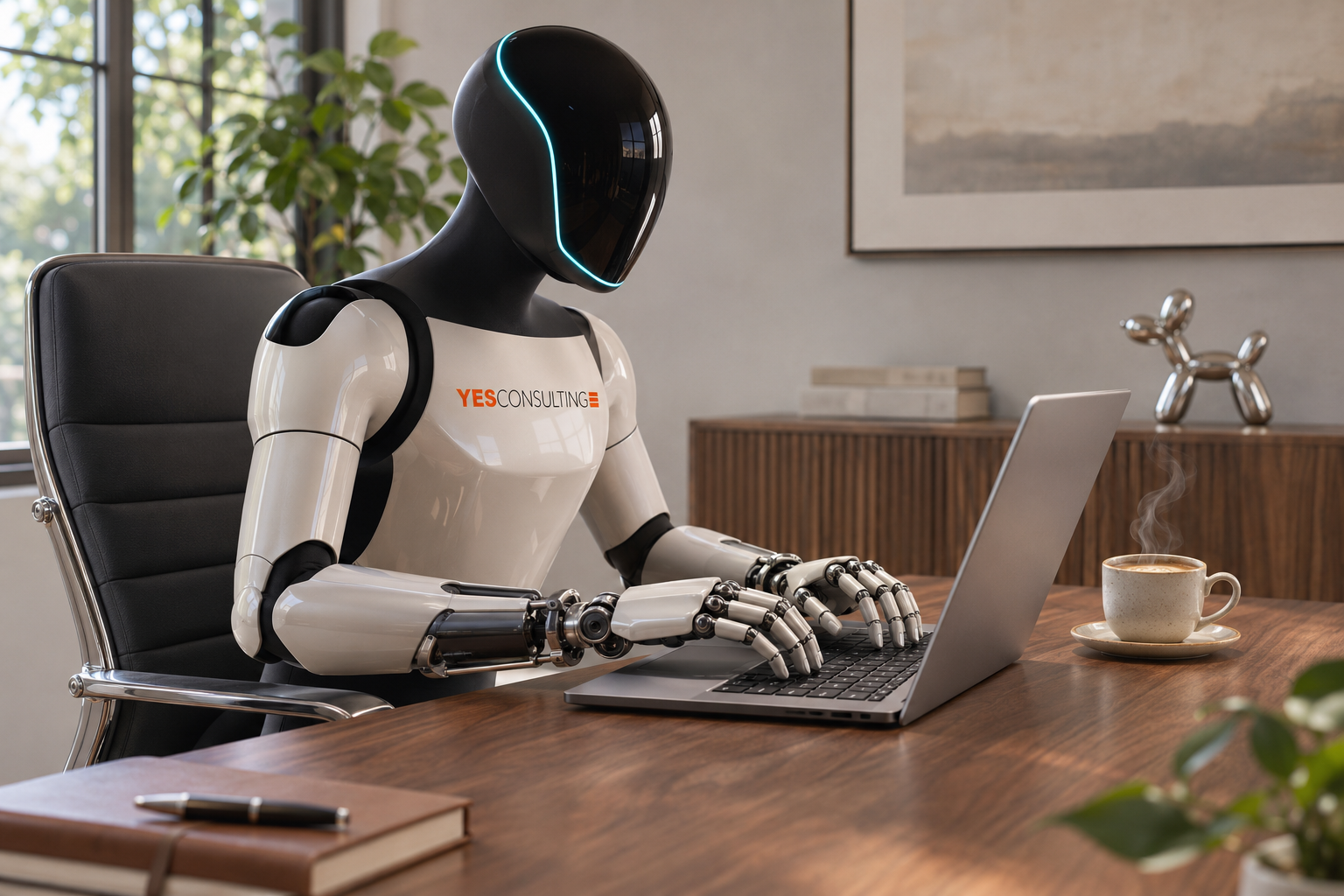
You may not want to hear this, but its going to happen! No matter what you think of Elon Musk, this was his 2025 prediction and doing the rounds again right now. Even if his prediction is out by 10 years or a factor of x10 the future is robots and AI.
Housekeeping remains the most vulnerable aspect of both hotel and short-term rental operations. Robots are transitioning from demonstrations to paid pilots, with initial adoption focused on empty rooms and apartments between guests for cleaning, inspection, and reporting, all out of guest view.
This video is from a commercial company (Proptonomy) developing robots and trainin them in the STR environment.
The true cost of a human cleaner
Operators are familiar with the risks: a single cleaner’s absence during a busy changeover can jeopardize multiple arrivals, impact reviews, and contribute to staff burnout. Rising labor costs, particularly in the UK, add to these challenges. This article examines both sides: current capabilities and limitations of robots, the strengthening cost argument, and why hospitality is poised to lead broader domestic adoption.
A full-time cleaner on the UK National Living Wage now costs employers approximately £28,300 annually, excluding absences. As of April 2026, the wage increased to £12.71 per hour. Employer National Insurance is 15% on earnings above £5,000, following a threshold reduction from £9,100 in April 2025.
| Cost Base | Total |
| Gross pay at £12.71/hour | £24,784 |
| Employer National Insurance (15% above £5,000) | £2,968 |
| Auto-enrolment pension (3%) | £556 |
| Total direct cost | £28,308 |
This estimate assumes no complications. Additional costs include:
- Paid holiday: 5.6 weeks a year of statutory leave is about 11% of paid hours with nobody cleaning, which still has to be covered.
- Sickness: statutory sick pay reforms took effect in April 2026, and every absence on a changeover day means overtime, agency rates or a cancelled booking.
- No-shows and personal issues: Childcare, transportation, and family emergencies are common and, during a 10am-to-4pm changeover window, pose a direct risk to revenue.
- Turnover and training: High staff turnover requires ongoing recruitment, vetting, training, and supervision to maintain guest standards.
- Consistency: Variability in performance can result in missed details, such as hairs, unchecked smoke alarms, or unreported maintenance issues, leading to negative reviews and additional costs.
This is not a criticism of cleaners. Their work is demanding and often undervalued, which is precisely why robots are well-suited to assist with these tasks.
Where robots stand today
Robots are already performing paid tasks, but most deployments still require human supervision, either onsite or remote. The key question is now how many robots one person can effectively oversee.
| 1X NEO | Home humanoid robot; US deliveries planned for 2026, international expansion in 2027 | $20,000, or $499/month |
| TAU Robotics | Apartment-cleaning pilots run from a San Francisco operator station | Reportedly $30/hour for one robot plus two human supervisors |
| Telexistence | Drinks-restocking robots in Japanese convenience stores, including FamilyMart | 300+ stores, about 4% error rate |
| Astro Robotics | Remote operators in Manila overseeing robots around the clock | About 60 operators, each supervising roughly 50 machines |
| Japanese nursing homes | Lifting aids, mobility aids and fall monitoring | 70% used at least one robot by 2022 |
The trend is clear: current economics rely on human supervision, often remotely. As operators manage more machines, the cost per cleaned room decreases significantly. A $499 monthly lease is less than £5,000 annually, compared to £28,300 for a full-time employee. However, this is not a direct comparison, as robots cannot yet perform the entire job independently.
Complexity vs Manouovereability
Most people consider robots physically incapable of refined movements and to a great degree this is true, however robot stability, power usage and capacity to be independent is already firmly embedded in the technology. The following is an extreme example and to a degree, a little disturbing!
Human bionics are accelerating robot development
Many people do not realise the advances in huma bionics, in particular when there has been an amputation. This has fallen into two camps: a) the mechanics and b) how the body can activate the bionic prosthesis. In the world of robots, activation is easy, but the message is clear, both industries are working toward fine motor skills and AI to leverage this.
The challenges
The challenges are significant, and operators who overlook them risk repeating early adopters’ mistakes.
- Robots cannot yet complete all cleaning tasks. Independent analysts report that no humanoid can fully manage laundry processes, including stripping, washing, drying, folding, and remaking. Bed-making and detailed tasks remain challenging.
- Rapid over-adoption can backfire. Japan’s Henn-na Hotel aimed for 90% robot staffing but retired more than half of its 243 robots after guest and staff complaints. Robots that assist staff are more effective than those that replace them.
- “Fake autonomy” undermines trust. Robots advertised as autonomous but operated remotely by low-paid workers are increasingly criticised in domestic situations. Operators should be transparent about how they control robots, when people are involved.
- Cameras and privacy: People strongly oppose always-on cameras and microphones in private spaces, particularly with remote monitoring. Under GDPR, voices and home interiors can identify occupants even if faces are blurred, and live viewing is considered data processing. In the short-term rental industry, this is not relevant for cleaning and operational activities.
- Guests still value human interaction. When issues arise, they expect a personal apology. Research shows compensation restores trust only when delivered by a person. This suggests a transition environment that needs to establish trust and emulate humans more closely.
- The UK market remains sceptical. Only 30% of British adults have seen or used a robot, compared to 38% in Germany and 75% in China. A September 2026 YouGov poll found 52% of Britons expect AI’s impact to be negative, up from 34% in 2024.
- Unions and jobs: Hotel unions have opposed robot-butler initiatives, and concerns about job losses will influence regulation and public perception.
Where adoption starts: the empty room. This is Hotels and STR.
Using robots in empty rooms between guests addresses most concerns. With no guests present, there are no empathy or privacy issues, and the tasks are repetitive and physically demanding—ideal for automation. Research shows people welcome robots for strenuous, behind-the-scenes work but resist those that replace human interaction or monitor them at home.
The likely order of adoption, easiest first:
- Inspection and reporting: A robot surveys the empty unit, recording cleaning standards, damage, missing items, and maintenance issues such as leaks, mould, failed bulbs, and worn grout. Reports are timestamped and sent to the operator’s system. This process requires no fine motor skills, reduces disputes, and creates an audit trail. Simpler wheeled robots can perform these tasks before humanoids are available.
- Hallways, floors, and back-of-house: Vacuuming, mopping, and late-night deliveries are already established uses in hotels. Industry reports suggest costs are about half or less than human labour, though these figures require independent verification.
- Partial turnover cleaning: Robots clean bathrooms, surfaces, and floors with remote operator support, while a smaller human team manages linen, presentation, and final checks.
- Full turnover: Robots will handle linen, bed-making, and complete resets as their dexterity and autonomy improve.
Hotels and serviced apartments are likely early adopters due to standard layouts, scheduled vacancies, and centralized management. Short-term rentals will follow, particularly larger portfolios where one robot can serve multiple units.
The training dividend: from hotel room to family home
Each hotel or apartment room cleaned by a robot provides valuable experience for future use in private homes. Commercial accommodations offer thousands of similar rooms, cleaned daily to set standards with supervisory oversight, making them ideal training environments for robots.
- Volume: a 200-room hotel generates more practice cleans in a month than a household does in years.
- Repeatable conditions: standard layouts and fixtures let the AI learn reliably before it faces the clutter of a real family home.
- Clear feedback: inspection checklists and guest reviews tell the robot exactly what “clean” looks like.
- Earning while learning: operators pay for useful work now, which funds the remote-operator stage that home robots also have to go through.
The domestic market is substantial. Australian estimates place unpaid domestic labor at about 21 hours per person per week, and OECD countries may require 13.5 million additional care workers by 2040. In Japan, subsidized care robots have become mainstream; 65% of older adults surveyed preferred robot-enabled care homes and would pay an 8% premium. Robots trained in hospitality will be well-positioned to meet this demand.
Timescales and what operators should do now
Our perspective: Robots will assist cleaning teams in hotels and serviced apartments long before full replacement, and no manufacturer has announced a firm date for fully autonomous home robots. A realistic timeline:
- 2027–28: inspection robots, floor-cleaning robots and delivery robots in hotels; first home humanoids reach US early adopters, mostly operated remotely.
- 2029–30: supervised turnover cleaning in larger apartment portfolios, with one remote operator overseeing many robots. Japan and the US lead, and continental Europe follows.
- 2030 onwards: Broader domestic adoption is expected as autonomy advances and costs decrease. The UK may adopt later due to public scepticism, although rising employment costs could accelerate adoption.
Cleaning roles will not disappear overnight. However, robots will first assume the most physically demanding and difficult-to-staff tasks, beginning with empty rooms.
Sources
- Research summary on robot acceptance in homes, eldercare and hospitality (source document)
- The National Minimum Wage in 2026, GOV.UK
- National Living Wage rising to £12.71: what employers need to budget, Accounts OS
- Employment rates and limits: changes for April 2026, CMS
